US Launches Airstrikes on Venezuela, Captures President Maduro in Overnight Operation
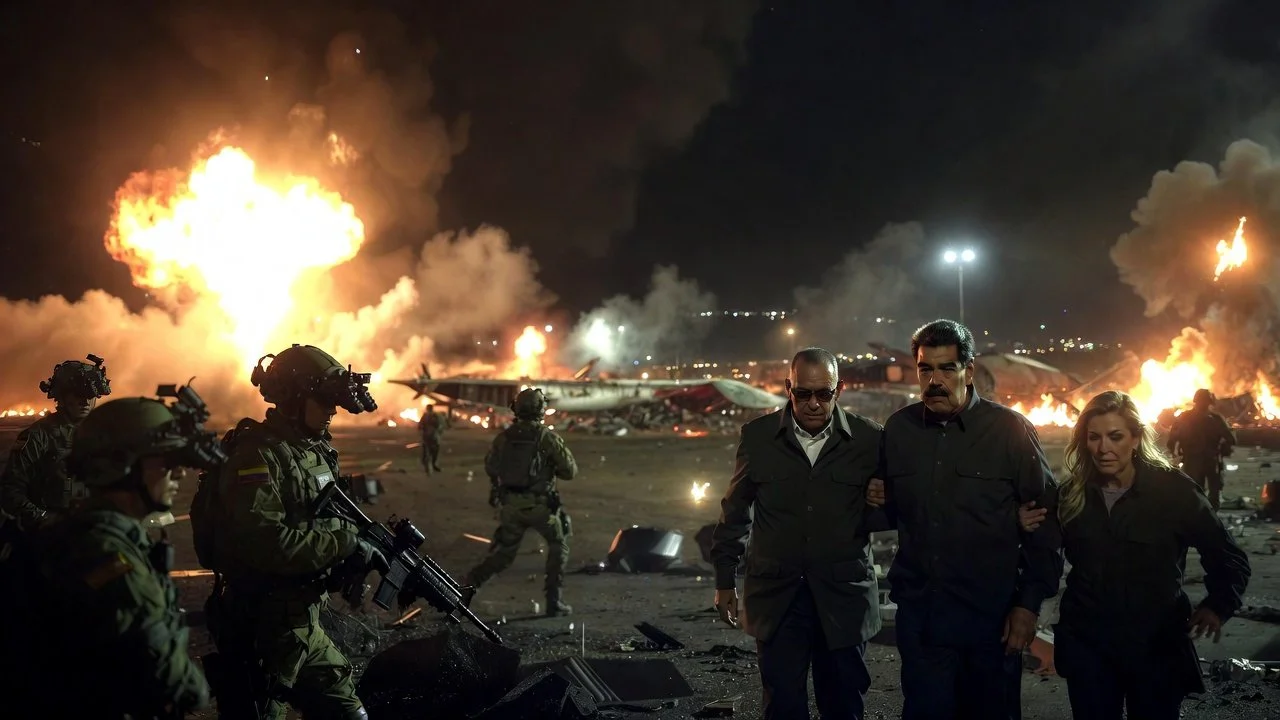

In a stunning escalation of tensions between the United States and Venezuela, President Donald Trump announced early Saturday that U.S. forces had conducted large-scale military strikes on multiple locations in northern Venezuela, including the capital Caracas, resulting in the capture of Venezuelan President Nicolás Maduro and his wife, Cilia Flores. The operation, which unfolded overnight on January 2-3, marks one of the most direct U.S. military interventions in Latin America in decades and has sparked immediate international outcry.


Trump, in a post on his social media platform Truth Social, declared that the strikes were "successfully carried out" and that Maduro and Flores had been "captured and flown out of the Country." He emphasized that Maduro would face charges related to drug trafficking, narco-terrorism, and weapons offenses in the U.S., referencing a superseding indictment unsealed by the U.S. District Court for the Southern District of New York. The indictment, which also names senior Venezuelan officials like Diosdado Cabello and Maduro's son Nicolás Maduro Guerra, accuses them of conspiring to flood the U.S. with cocaine and using weapons to protect their operations.


Eyewitness accounts and social media reports from Caracas described explosions and loud noises around 2 a.m. local time, with power outages and internet disruptions affecting southern parts of the city. Key targets reportedly included Fuerte Tiuna military base and La Carlota airbase. Videos circulating on platforms like X showed fires and aircraft activity over the capital, though independent verification has been hampered by the blackouts.


U.S. officials, speaking on condition of anonymity, confirmed that elite Delta Force units were involved in the ground operation to apprehend Maduro, framing the action as a counter-narcotics mission rather than a full invasion. Trump has long accused Maduro of election fraud, drug smuggling, and harboring ties to groups like Hezbollah, Iran, Russia, and Cuba, which he cited as justifications for the strikes. A White House briefing is scheduled for later today to provide more details, with some officials noting that the operation aimed to minimize civilian casualties while targeting regime strongholds.


In response, Venezuelan authorities declared a state of emergency, denouncing the strikes as "military aggression" and a violation of sovereignty. Acting officials in Caracas have vowed to resist, though leadership continuity remains unclear amid reports of disruptions. The Venezuelan government has rejected U.S. claims of Maduro's capture, calling them propaganda, but has not provided evidence of his whereabouts.


The international community reacted swiftly. Russia, Iran, and Cuba condemned the action as an "imperialist intervention," while the United Nations called for an emergency Security Council meeting. Experts described the move as a "coordinated pressure package" combining military force with legal leverage, potentially reshaping geopolitics in the Western Hemisphere. Oil markets jittered in early trading, given Venezuela's vast reserves, with concerns over supply disruptions and the return of U.S. oil companies to the region.


This operation comes amid years of U.S. sanctions against Maduro's regime, which Washington has labeled illegitimate since disputed elections in 2018 and 2024. Maduro, in power since 2013, has faced accusations of human rights abuses and economic mismanagement that have driven millions of Venezuelans into exile. The U.S. had previously offered a $15 million reward for information leading to his arrest.


As daylight assessments continue in Caracas, the full extent of damage and casualties remains unknown. Global leaders are urging restraint, but the capture—if confirmed—could signal a new era of U.S. assertiveness in Latin America under Trump's second term.