Maduro Pleads Not Guilty in Manhattan Court
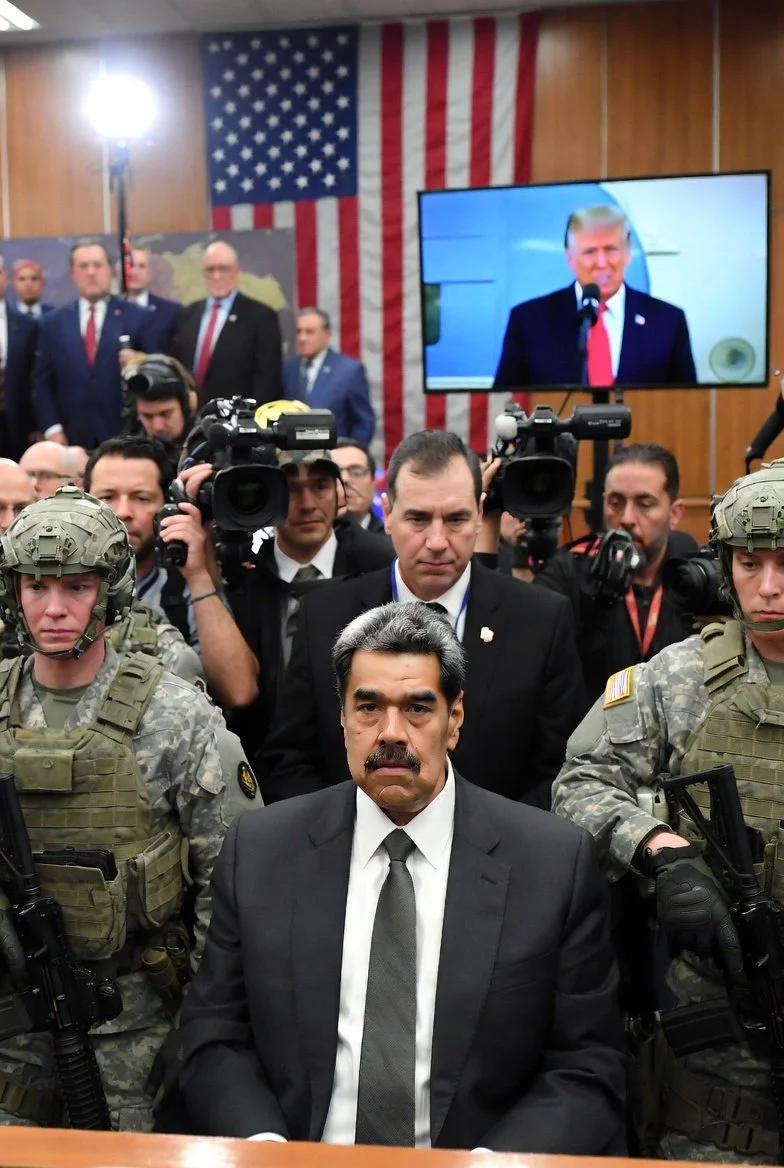

On January 5, 2026, the United States remained gripped by the dramatic fallout from the weekend's unprecedented military operation in Venezuela, where American forces captured President Nicolás Maduro and his wife, Cilia Flores, in a swift raid on their residence in Caracas. Maduro, now detained in a high-security New York City facility that has previously held figures like Ghislaine Maxwell and Sean "Diddy" Combs, appeared in federal court in Manhattan today and pleaded not guilty to serious charges including narco-terrorism, drug trafficking conspiracy, money laundering, and illegal weapons offenses. His wife entered a similar plea during the initial arraignment, which unfolded under heavy security as prosecutors outlined evidence from long-running investigations into Venezuela's alleged role in cocaine flows to the U.S.


President Donald Trump, speaking from Air Force One and earlier at Mar-a-Lago, defended the action—codenamed Operation Absolute Resolve—as a necessary blow against narco-terrorism threatening American communities, while asserting that the U.S. would temporarily oversee Venezuela's transition to restore order, repair its crumbling oil infrastructure, and counter influences from Iran and other adversaries. Trump also floated the possibility of further military steps if cooperation falters and escalated rhetoric by threatening action against Colombia over alleged drug ties, calling its president a problematic figure, and renewing his interest in acquiring Greenland for strategic reasons. Acting Venezuelan President Delcy Rodríguez, who assumed power after the raid, adopted a more conciliatory tone today compared to initial condemnations of the "illegitimate aggression," hinting at potential dialogue with Washington even as Maduro's son expressed firm family support for her leadership.


The operation has triggered sharp international reactions, with the UN Security Council holding an emergency session where Russia, China, and others denounced it as a blatant violation of sovereignty and a risky precedent for unilateral interventions. China accused the U.S. of positioning itself as "world judge," while global markets showed resilience: U.S. stocks climbed modestly, buoyed by tech gains and optimism around potential Venezuelan oil sector openings, even as oil prices edged higher and gold benefited from safe-haven demand amid geopolitical uncertainty. Domestically, congressional leaders awaited a classified briefing from Defense Secretary Pete Hegseth, Secretary of State Marco Rubio, and other officials on the raid's details, which had not been pre-notified to Capitol Hill, raising questions about oversight in the early days of Trump's second term.


Beyond the Venezuela crisis, other notable developments included ongoing market anticipation for 2026 economic trends, with forecasts pointing to continued stock growth driven by AI and resilient consumer spending, alongside expectations of lower gasoline prices marking the cheapest year since the COVID era. Preparations advanced for major upcoming events like the 2026 FIFA World Cup, while isolated domestic incidents, such as reported damage to Vice President JD Vance's Ohio residence with a suspect in custody, added to the day's varied headlines. Overall, the Maduro capture continued to dominate U.S. attention, reshaping foreign policy debates and testing the limits of American power projection in Latin America.